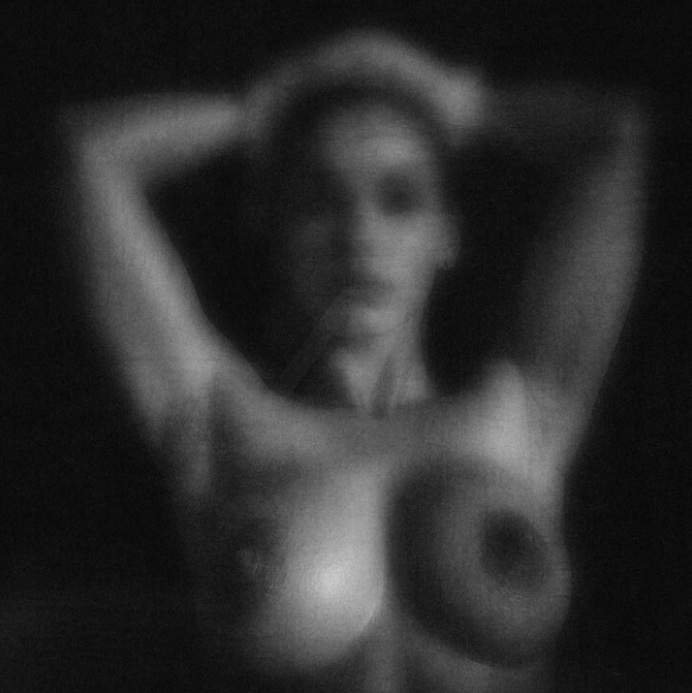
Before the first word, before the first conscious thought, there is the skin. The sensitive frontier between the self and the universe. It is our first map, the original canvas where the world begins to inscribe its story. The philosopher Paul Valéry once said that the deepest thing is the skin, because it is through it that life touches us for the first time. It is through it that we feel heat, cold, the blow, the caress.
This living envelope, which breathes and feels, is not just a barrier. It is an archive, the first and primordial archive of our entire existence. Long before the mind learns to name, to organize, to remember or to forget, the body already knows. It is, as Maurice Merleau-Ponty described, our vehicle of being in the world. Our fundamental condition, the pre-reflective basis of all reality.
In this territory of flesh and bone, every mark is a word. Every gesture, a sentence. Every pain, an entire paragraph. This is the story of the silent narratives we carry, the visual biography that reveals itself when we dare to look at what the body remembers.
The Grammar of the Scar
Observe a scar, any scar. It is not a flaw on the surface, it is a full stop. The indelible record of a moment when the world and the body collided with enough force to leave a permanent trace. The scar is the involuntary memory par excellence. The mind can repress, the consciousness can distort, but the skin does not lie. It is the incorruptible witness.
Every human being carries the first of all marks, the scar from which we originate, the vestige of the trauma of birth that throws us into the world. From that primordial instant, life becomes a process of accumulating these signatures. A fall in childhood, a surgery that saved a life, an act of violence. Each one is a hieroglyph of pain and survival.
In some cultures, marks on the body are symbols of pride, of belonging, of lineage. In others, they are seen as disfigurements to be hidden. But regardless of social judgment, the truth of the scar remains. It is a geological fact in the landscape of our body, a memorial silently saying, this happened, I was here, I survived.
The Ink of Intention
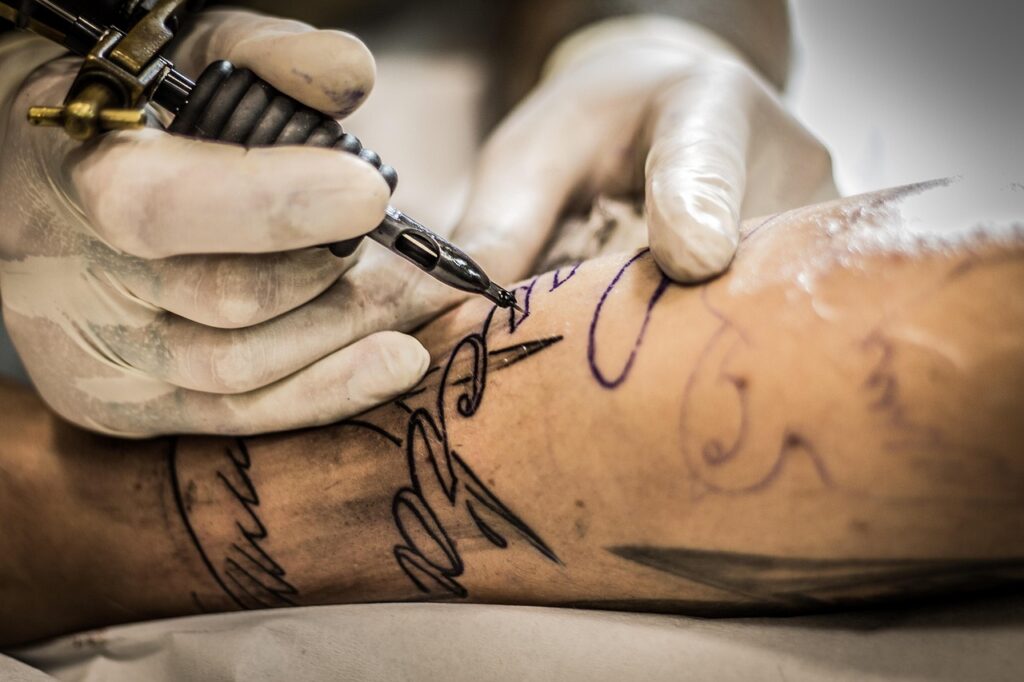
If the scar is life’s involuntary prose, the tattoo is the poetry of intention. It is the act of taking the pen and writing one’s own story on skin already written by chance. It is a way of constructing a personal narrative, of reclaiming the body as one reclaims a text to reinterpret it.
Here, the body becomes what psychology calls the Body Territory. It is our first home, our sovereign space. To tattoo is to mark, decorate, and defend this territory. It is to say, this body is mine, and within it, my will, my aesthetic, and my chosen memory shall rule.
The dialogue between scar and tattoo is one of the deepest. The practice of cover-up, of covering a scar with a new image, is not an act of erasing the past, it is an act of transformation. It is the alchemy of resilience, where a memory of pain is recontextualized by a symbol of power, beauty, or personal meaning. It is a political act of self-determination that turns a mark of imposed vulnerability into a declaration of chosen identity. The body then ceases to be a passive diary and becomes an active manifesto.
The Naked Truth
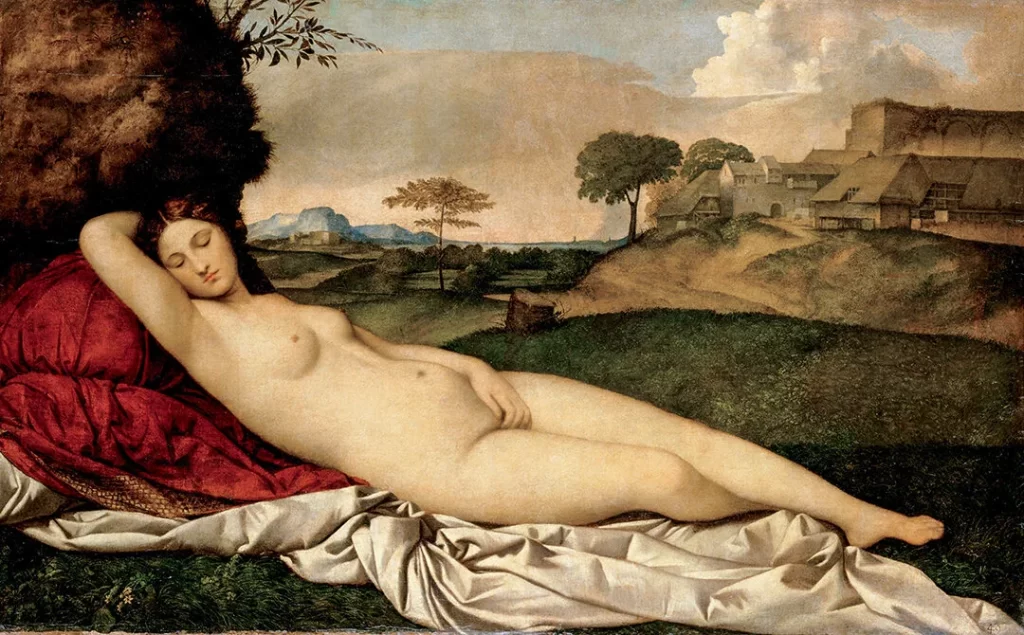
Throughout the history of art, the nude body has been a battlefield of ideals. For the ancient Greeks, the heroic nude represented perfection, strength, and divinity. With Christianity, it became a symbol of shame, the vulnerable condition of Adam and Eve. The nude has never been neutral, it has always been dressed in moral and cultural meanings.
But art, in its endless search for truth, invites us to go beyond. Contemporary artistic nudity does not seek an ideal but a reality. It proposes to undress not only the clothes but the social masks, to reveal the body as it is, a repository of life marked by time, gravity, joy, and suffering.
It is the search for Merleau-Ponty’s lived body, the presentation of existence in its rawest form. It is not about representing an idea through the body, but about presenting the body itself as the central idea, as the place of emotional truth.
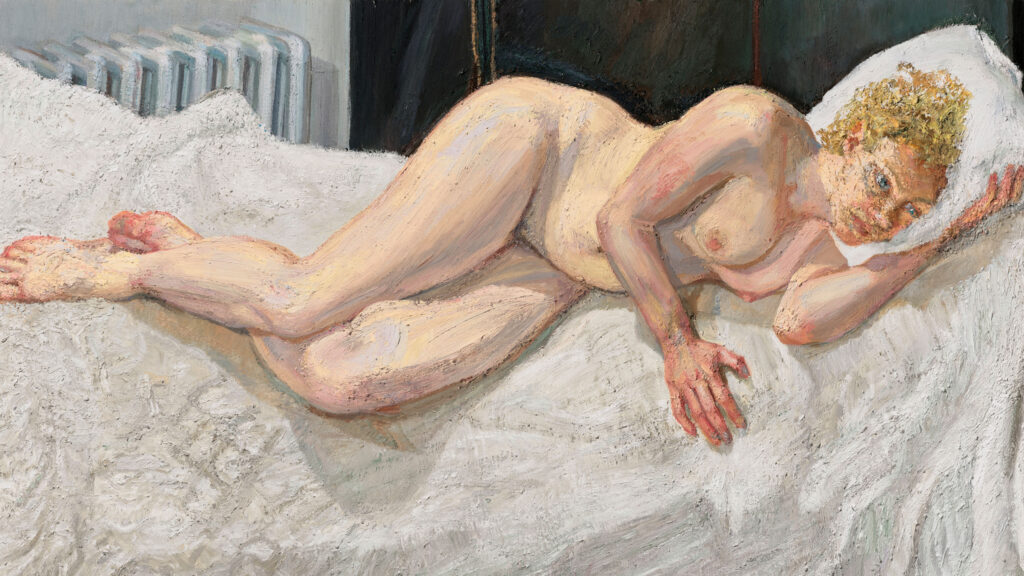
Portraits of Flesh and Soul
Few artists have delved as deeply into the truth of flesh as Lucian Freud and Egon Schiele. For them, the skin was not a surface to be polished but a psychological landscape to be explored.
Lucian Freud painted with brutal honesty. He sought the truth and authenticity of the human condition, showing vulnerability without filters. His work is an autobiography told through the bodies of others, full of memory, movement, and sensuality. In his canvases, flesh has weight, texture, fatigue. Veins pulse, skin folds. He did not paint people, he painted the life happening inside them.
Egon Schiele, on the other hand, distorted anatomy to reveal the soul. His angular, contorted bodies are the physical manifestation of unconscious emotion and psychology. In his nervous lines, we see anguish, raw desire, and the conflict of a human being confronted by his own mortality and sexuality.
Both, in their own ways, painted embodied memory. They show us that emotional truth is not behind the body, it is the body. The tension of a muscle, the curve of a spine, the weight of a gaze, all of it is the language of the soul manifesting through matter.
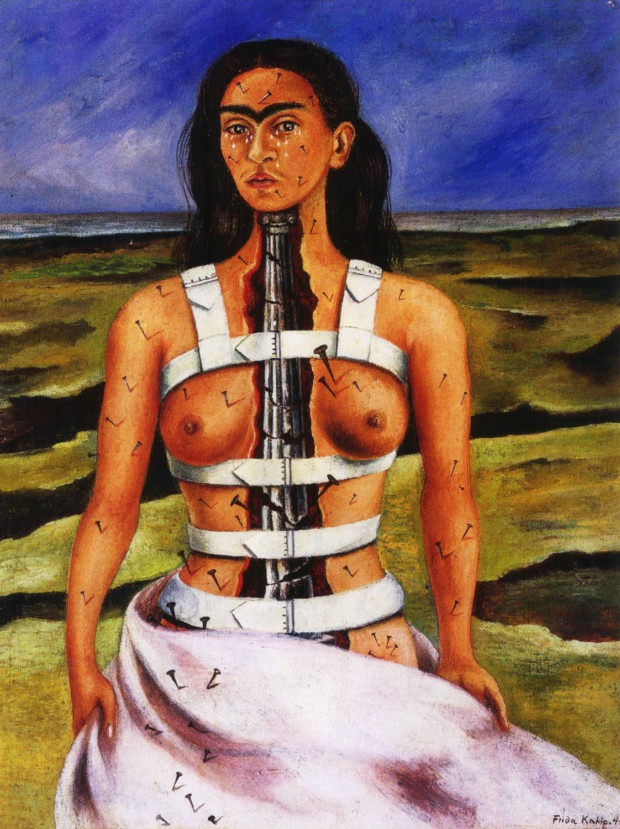
Frida Kahlo, The Broken Column, 1944, Museo Dolores Olmedo
The Symbolic Body of Frida Kahlo
And if there is one body that became art itself, it is Frida Kahlo’s. For her, art was not a choice, it was a necessity born of physical pain. Her body, broken by a terrible accident, became her obsessive theme and her main canvas. She said, I paint myself because I am so often alone and because I am the subject I know best.
Her paintings and intimate diaries are not merely depictions of suffering. They are a complete metaphor of Frida’s body. When she painted her spine as a crumbling Ionic column, or her body pierced by nails, she was not just expressing pain, she was embodying it, transforming it into a powerful symbol.
Her diary, a visceral fusion of drawings, poems, and confessions, is her symbolic body. There, she drew wings to fly away from her bed, transmuting agony into beauty and immobility into creative freedom. Frida taught us the most radical lesson: creation can be a somatic process. Art can be born not despite the wounded body but through it. She did not paint her dreams, she painted her reality. And that reality was inscribed in every inch of her being.
The Wisdom of Gestures
So far, we have spoken of the surface, the skin. But body memory goes deeper. It settles in bones, muscles, nerves. It is memory that needs no image, the wisdom of doing.
Philosopher Merleau-Ponty called this body memory. He said, a movement is learned when the body understands it. Think of learning to dance. At first, every step is conscious. Then something changes. The body takes over. It knows the rhythm, the next movement, without mental command.
This knowledge is the result of a process of sedimentation. Every experience, repetition, and habit deposits itself in us, layer upon layer, building what he called the body schema. It is our unique style of being in the world, our motor signature. The body is an unconscious intelligence shaped by a lifetime of interactions.
Ghosts in the Body
But this sedimentation holds not only joy and skill, it also stores pain. Trauma is not just an event that happened back then in the mind. It stays lodged in the body. It is the embodied memory of violence, fear, loss.
This memory lives in our nervous system. It manifests as chronic pain with no apparent cause, as anxiety tightening the chest, as a constant posture of defense. It can be awakened by a smell, a sound, a touch, transporting the body back to the original danger, even when the conscious mind does not remember why.
Our gestures and body language often express these unconscious impulses, revealing truths that words try to hide. In contexts of collective or structural violence, these bodily symptoms are not individual flaws, they are physical denunciations, silent testimonies of suffering that could not be verbalized. The body becomes a living archive of injustice, a ghost that insists on telling its story.
Nietzsche and the End of Duality
For centuries, Western philosophy taught us to distrust the body, to see it as the prison of the soul. Friedrich Nietzsche rebelled against these despisers of the body and offered a revolutionary truth. He advised, take the body as the starting point and make it the guiding thread, that is essential.
For Nietzsche, the separation between body and soul was the great lie. His declaration remains one of the most powerful in philosophy: Body am I entirely, and nothing more, and soul is only a word for something about the body.
Writer Clarice Lispector, with her poetic sensitivity, captured the same truth through lived experience: how the grateful body, still panting, sees to what extent the soul is also body. She did not want halves but wholeness: I want to be whole, with the soul too.
There is no body and soul. There is the body-soul, an indivisible unity. Intelligence is not only in the head, it lives in every cell. Memory is not only in the brain, it lives in the curvature of the back. Spirituality is not an escape from the body, it is the deepest dive into it.
The Body We Are
Now, for a moment, silence.
What stories does your skin tell?
What memories do your hands keep?
What truths rest in your bones?
The body does not judge. It only records. It is the sacred text of your unique life. Read yourself not with criticism but with compassion. Listen to what it says in silence, for as Carl Jung said, it is when the body is silent that the soul speaks.
The body remembers what the mind forgets.
It does not hold only the pain, it holds the strength that overcame it.
It does not hold only the wound, it holds the healing.
It is the silent guardian of our most authentic truth.
And learning to listen to it may be the only journey that truly matters.
Private Creative Archive
Go Deeper Inside Hueb Arts Private Membership
Unlock private photo retouching videos, fine art editing workflows, Camera Raw presets, PDF manuals, visual studies and exclusive creative tools created for photographers, retouchers, visual artists and image creators.
- Private Photoshop retouching tutorials
- Fine art photography editing workflows
- Camera Raw presets and PDF manuals
- Exclusive visual studies and creative tools
Photo retouching, fine art editing and uncensored creative workflows.